Max Wyman - Assistant Editor
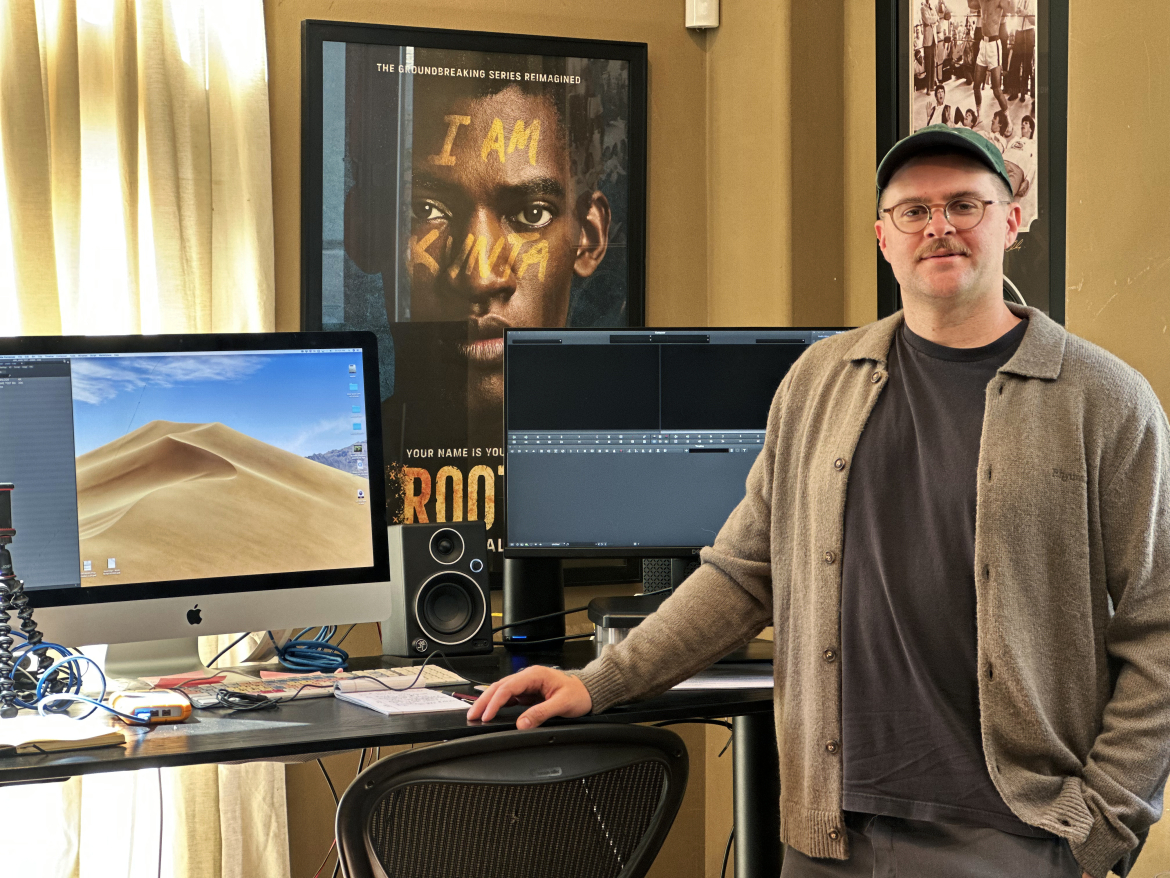
October 2026
Where are you currently employed?
Disney/Lucasfilm.
Current projects?
I’m wrapping up the second season of “Ahsoka,” a Star Wars streaming show.
Describe your job.
This is the hardest question of the bunch. An assistant editor’s job is quite elusive. To those outside the industry, my job is to support the lead editor from the start of the show through the project’s finish and delivery. If I am doing my job correctly, the editor should be able to focus on cutting the show and other day-to-day creative decisions (and not worry about the project’s minutiae).
To those inside the industry, we know an assistant can wear many hats. Some days I’m more of a supervisor, and some days I’m more of a producer. Some days I help the edit, and some days I’m I.T. Some days I’m digging through a monstrous sound library to find the perfect sound for a metal “clang.” But every day, I try my best to give the editor the assurance they need that the show is running smoothly (even when sometimes it isn’t!).
How did you first become interested in this line of work?
At the University of Southern California, I had the opportunity to work in most parts of the production chain and found post-production the most enjoyable. I took a few picture editing classes and never looked back. There’s something really special about sitting with the material and determining which parts of the puzzle will make the best-flowing, beautiful piece.
Who gave you your first break?
So many people have helped me along the way, and I hope to do the same for others the rest of my career. For my first break, a recruiter in San Francisco hired me for Masterclass, the online streaming platform where celebrity professionals teach through video. That was my first job as an assistant editor, and I was thrown into the fire immediately: multiple deliverables, multiple producers, multiple video classes, all at once.
What was your first union job?
I was an assistant editor on the two-part finale of “Timeless,” an episodic time-travel drama on NBC. It was incredibly surreal to walk onto the Sony lot for the first time as a union member working on my first television show. I can’t tell you how many mistakes I made on that show, and without the other assistants and my editor, William W. Rubenstein, I never would have progressed in this industry.
What credits or projects are you proudest of, and why?
One project I’m especially proud to have been part of was “Transformers: Rise of the Beasts.” For me, it was the first show of its size where I had multiple opportunities to shine and assist at the highest level. Thanks specifically to Joel Negron and Justin Yates.
What was the biggest challenge in your job (or on a particular project) and how did you overcome/solve it?
I once worked on a feature that had no full-time post supervisor. It stretched the rest of the post team thin to meet our deadlines. During the show, we never quite solved that problem, but ever since, I’ve made it abundantly clear on every show how paramount a post supervisor is. I’m usually in touch with post supes every couple of hours (even if they get annoyed with me!).
What was the most fun you’ve had at work?
There’s nothing like seeing the show you’re working on up on the big screen for the first time. It doesn’t matter whether it’s a test screening, a playback for a director, or the actual premiere. Nothing brings me more joy than seeing all the hard work my team and I put in and all the pieces of a production come together on the big screen.
Jobwise, what do you hope to be doing five years from now?
I hope to be cutting shows that resonate with me and, more importantly, to be working with good people. This is a tough business, and it gets tougher if the people you’re working with aren’t pleasant to be around. I love being able to count on the people I’m working with — to share a laugh or an inspiring conversation and help make our show the best it can be.
What are your outside activities, hobbies, passions?
I have two dogs, a German shepherd and a border collie. When I’m not working, I’m usually spending time with them on trails, at parks, or at the beach. I also love to rock climb (which I do with my wife, as well)! It’s a serious passion of mine that keeps me active after all the sitting we do.
Favorite movie(s)? Why?
“Shanghai Noon.” Absolutely love Owen Wilson in any buddy comedy. And Jackie Chan is a master of his craft.
Favorite TV program(s)? Why?
“Friday Night Lights.” Peter Berg did a fantastic job at the height of long-form drama television: well-written characters and a relatable plot for me at that time in my life.
Do you have an industry mentor?
My mentors are the people I’ve worked with (or continue to work for) who help guide me through the industry. Justin Yates and James D. Wilcox, ACE, continue to inspire me and offer advice whenever I need it. They’re both titans in this industry and have shaped me to be the worker I am today.
What advice would you offer to someone interested in pursuing your line of work?
When I go back to USC and share some of my industry knowledge with students, I always say you have to love making movies more than anything because this industry isn’t the glitz and glam you see from the outside. Like any other industry, you need to work hard to get far. Right now, specifically, it’s a tough time in the industry, and what keeps me going is the pure art of a finished project. It can take your breath away. Above all, you have to love what you do so that small hindrances and setbacks will only temporarily bump you off the road to success.
Was there ever a circumstance when you had to rely on the Guild for help or assistance?
On more than one occasion, multiple colleagues and I contacted the Guild about work conditions, and it proved to be incredibly useful. We’ve all been on shows that test our patience and our personal schedules, but when you hit multiple golden hours and there’s no finish line in sight, it helps to have an organization that has your best interest in mind.
Is there anything you’d like to say to your fellow Guild members, some words of encouragement?
Have pride in the work you do, and don’t be afraid to ask questions. Some of the smartest assistants I have ever worked for or trained ask as many questions as they need to make sure they understand the task at hand. They (or you!) may be the one who has to answer when someone comes knocking. No matter how large the job or assignment, take pride in knowing you did it to the best of your ability.
Josh Lewkowicz - Associate Editor
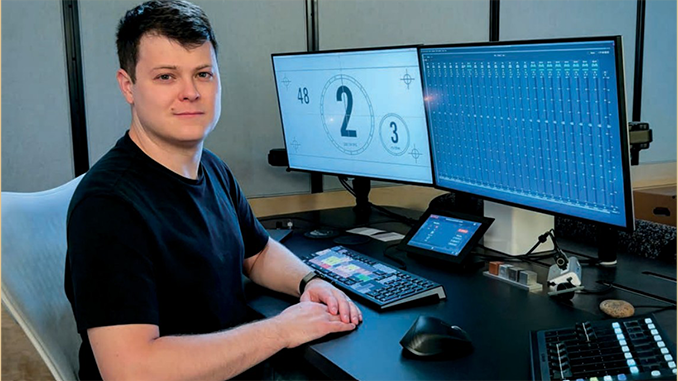
September 2026
Q: Where are you currently employed?
Netflix Animation.
Q: Current projects?
An unannounced animated feature film.
Q: Describe your job.
As an associate editor, I’m a hands-on part of the creative editorial team. My dayto-day really depends on where we are in the production process, which keeps things exciting.
Some days, I’m building a scene entirely from scratch — layering storyboards, scratch dialogue, temp music, and sound effects — and then refining it based on notes until it hits exactly the right beats. Other days, I might be in the theater mixing audio to prep for a screening or sitting down with creative leadership to review how the latest shots fit into our cut.
No two days are the same, and I love watching a project evolve from storyboards to the final lit and composited shots.
Q: How did you first become interested in this line of work?
I’ve loved filmmaking for as long as I can remember, though I actually started out wanting to be a cinematographer. I was that kid who roped my friends into acting in short movies and spent hours making stop-motion videos with Legos and Hess trucks.
As I kept shooting and editing my own projects through college, my focus shifted toward post-production. I would devour behind-the-scenes featurettes, completely fascinated by how an idea evolves from the page into a final film. Being an editor turned out to be the perfect way to stay hands-on throughout much of a film’s evolution.
Q: Who gave you your first break?
My first real foot in the door was a summer videography internship at DreamWorks Animation, thanks to Rick Menze and Kerrin Piche Serna. As part of the Education Department, we were responsible for shooting and editing training videos, guest speaker segments, and even behindthe-scenes content. That led to a production assistant role at DreamWorks TV, where I spent a year on two different shows: “Dragons: Race to the Edge” and “Trollhunters.”
My first big break in editorial came a bit later. A former colleague was looking to hire assistant animatic editors. Since I hadn’t cut animatics before, the team had interviewees take an animatic test. We were handed all the raw materials and asked to build an animatic from the ground up. The team liked my cut, and that officially launched my career in the edit bay!
Q: What was your first union job?
It was on the series “Home: Adventures with Tip & Oh.” I joined the team as an assistant animatic editor, where I built out episodes in Premiere Pro and managed handoffs to the dedicated Avid team, who took over the finishing phase. It was an incredibly fast-paced environment, but it was the perfect crash course. Being in the animated TV pipeline taught me a ton about creative cutting, workflow, and organization in a very short time.
Q: What credits or projects are you proudest of, and why?
I’m incredibly proud of my work on Guillermo del Toro’s “Trollhunters.” It’s actually a really special, full-circle milestone for me. I originally started on the show as a production assistant and later returned as an assistant editor and additional editor. Aside from being a fan of the series, I’m very grateful for that team because they really supported my growth and helped launch my editorial career.
Q: What was the biggest challenge in your job (or on a particular project), and how did you overcome/solve it?
One of the biggest challenges I’ve faced was actually a workflow and volume challenge during my time in TV animation. I worked in a shared assistant editor bay with a group of other assistants, and together we supported multiple editors across a wide variety of shows simultaneously. The sheer volume and complexity of having so many different pipelines running at once was pretty daunting at first.
I always equate that experience to working in a busy commercial kitchen. You’d have production staff “ordering” a massive batch of outputs all at once. Sometimes we’d “burn a dish” — like a publish going wrong — and have to fix it on the fly. And sometimes, people didn’t know what to order. They knew their end goal, so we would make recommendations to help them define the exact deliverable(s) they needed.
We overcame the complexity through hyper-clear communication, and we had a room full of terrific people with great attitudes. And because we were all stationed in one room, we could talk constantly, bounce ideas off each other, and essentially run the bay like a well-oiled kitchen crew. This experience taught me how to communicate, collaborate, and troubleshoot.
Q: What was the most fun you’ve had at work?
Some of the most fun I’ve had at work has been jumping in to record scratch dialogue. Over the years, I’ve done quite a bit of temp voice work to help the team build out early scenes. But on one particular project, my scratch track actually survived the entire pipeline — even into the final lighting phase!
It was incredibly fun and a little surreal to see a fully lit shot playing back with my voice attached. The track was eventually replaced by a professional loop group right before the show aired, but it’s still my goal to make it into the final mix!
Q: Jobwise, what do you hope to be doing five years from now?
My goal is to step into a lead editor role. Over the course of my career, working across multiple studios and shows, I’ve been incredibly fortunate to meet and learn from so many talented people.
As I actively build toward taking on more creative ownership, I also want to pay that support forward. A huge part of why I want to be a lead is the opportunity to build my own editorial team. I’d love to foster a collaborative environment where team members can grow their own careers and find their footing in the industry, just as many great folks have done for me.
Q: What are your outside activities, hobbies, passions?
Outside of the edit bay, I’ve been an avid drummer since the fourth grade. I didn’t always have the space for a kit over the years, but I recently got a setup going again, which has been super fun!
I also play video games with a close group of friends a few nights a week. Honestly, the gaming usually comes second — it’s mostly just a great excuse for us to hang out and catch up.
And going back to my early days, I’m still a massive camera nerd. I love spending my free time reading about new gear and staying current with production trends.
Q: Favorite movie(s)? Why?
I’m sure it’s a popular answer, but “The Empire Strikes Back” is still one of my all-time favorite movies. Growing up, I was fascinated by the behind-the-scenes featurette that played before the movie on VHS. So many unique techniques were used to make these movies. It’s truly a magic trick captured on celluloid!
Q: Favorite TV program(s)? Why?
The first few seasons of “SpongeBob SquarePants” still stand out to me as being incredibly formative. I find myself quoting from them more and more as I get older, and I’m always delighted by how often my colleagues instantly catch the references. I think those early seasons had a massive cultural impact on our generation. I’ve even worked alongside some original crew members of the show, which has been another full-circle moment for me. I’ve also had the chance to work with and meet Tom Kenny [the voice of SpongeBob] at a wrap party, which was amazing!
Q: Do you have an industry mentor?
While I don’t have one official mentor, I’ve been incredibly lucky to work alongside some amazingly talented people throughout my career. Because I’ve spent so much time in collaborative environments, like those shared assistant editor bays, I’ve really been mentored by a collective. I’ve been fortunate to absorb a range of techniques, workflows, and advice from so many generous editors, directors, and production staff.
Q: What advice would you offer to someone interested in pursuing your line of work?
My biggest piece of advice is that it’s never too early to start working on creative endeavors you are passionate about, especially given the staggering amount of free knowledge and accessible tools out there right now.
On the creative side, watch as much as you possibly can. Pay attention to the movies and shows that inspire you, and really dissect them: first, from a technical storytelling viewpoint, how they make you feel something, and then, from an emotional viewpoint, why you are feeling it. I think it’s a great way to develop your own creative instincts and figure out your personal style.
Just as important (and sometimes even more so when starting out) is mastering the technical skills. Technology and workflows in our world move incredibly quickly, so staying curious and keeping up with industry trends will ultimately make you that “go-to” person on the team.
Q: Was there ever a circumstance when you had to rely on the Guild for help or assistance?
Throughout my career, I’ve reached out to the Guild a few times, primarily for insight and support when navigating rates or reviewing a new offer. Because agreements and pay scales can vary, I’ve found it incredibly helpful to lean on the field reps as a resource. It’s the best way to ensure I always have the most accurate, up-to-date information before stepping into a new role.
Q: Is there anything you’d like to say to your fellow Guild members, some words of encouragement?
I’m truly grateful to have this career and be surrounded by such talented and kind people. Despite the evolving challenges our industry faces, I encourage us all to keep pushing forward. As editors and artists, we have the unique opportunity to touch people’s lives through the stories we help tell. Please keep making the things you want to see in the world. Be kind, be curious, and try to have some fun while you’re at it!
Helen Truong - Story Analyst
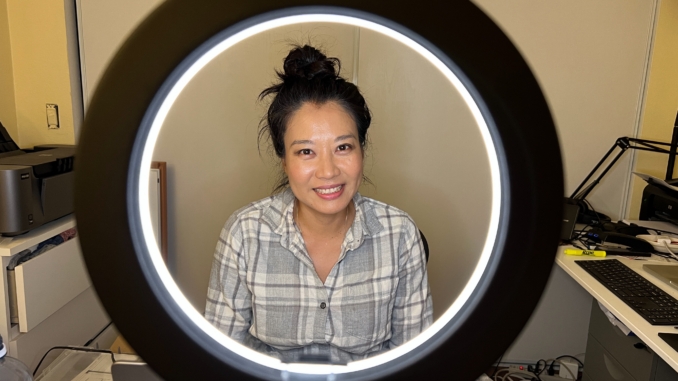
July 2026
Where are you currently employed?
Sony Pictures.
Current projects?
I’m going to assume Fight Club rules for anything that hasn’t been announced — but the ones that are already public knowledge include: “Django/Zorro,” “Labyrinth 2,” “Guinevere,” “Swiss Guard,” a remake of the Chinese comedy “Hi, Mom,” and “Sex and Vanity.”
Describe your job.
Reading. Lots and lots of reading.
I read screenplays, books, and graphic novels for the studio. Half the time, I evaluate these as submissions that I recommend the studio either consider making or not. My coverage (as the resulting work product is called) consists of a couple of pages of story synopsis followed by about a page of comments in which I consider what works, what doesn’t, and what effect any elements (attached cast, director, etc.) might have if this were to become a studio project.
After the studio purchases a piece of material, it becomes an active development project. If it’s been assigned as my project (sometimes I’ve read the material as a submission, sometimes not), I give notes on each draft, comparing it to the previous one. I follow the project until it goes into production or falls out of development. Notes are much more narrative-intensive, where I assess how changes in plot, characters, relationships, etc. affect the story, whether it’s a lateral change or an improvement or a step back, and what other changes would lead to the best version of this project.
Occasionally, I will do a detailed comparison of multiple drafts by different writers that will help the studio and the Writers Guild determine which writer(s) should receive screen credit and of what type (e.g., based on, story by, screenplay by, written by, etc.).
How did you first become interested in this line of work?
I have always loved reading, writing, and movies, and I’m also an aspiring writer/director, so there are only a few jobs that use those exact skill sets. It’s like being a pilot or an alligator wrestler: You are limited to almost exactly the one thing you know.
Who gave you your first break?
Ali Bell, who was at Nickelodeon at the time, gave me my first coverage job in LA. I had just finished film school at NYU, and as part of the program, I interned at a production company during the school year. So I learned to read scripts and do coverage during that internship and discovered I had a knack for it. Because I had focused on a writing and directing track, I was already interested in narrative, structure, and writing. Working as a reader also gave me a way to get paid for doing what I already loved and needed to do: reading a ton of scripts that were getting made, getting people signed, and getting people jobs.
What was your first union job?
Sony is my first union job. Before Sony, I worked as a freelancer for multiple production companies and agencies, such as Amazon, Participant Media, UTA, and Paradigm.
What credits or projects are you proudest of, and why?
Development can be such a long process, and I haven’t been at Sony long enough to see many movies through to production. That said, “The Woman King” was one project I was really happy to work on. That script came in great shape from the beginning.
What was the biggest challenge in your job (or on a particular project) and how did you overcome/solve it?
We’re doing a remake of “Hi, Mom,” a comedy that was a huge hit in China. But even though most of the elements in the script were exchanged for American equivalents, and even though the heart of the story is universal, something seemed to be missing in the translation. Some of that was cultural humor and stakes, but there was something else that wasn’t landing. So rather than just read the drafts that came in, I asked to watch the original film to see what the essence of the story was and, I hoped, how it was eluding us. That helped unlock a key moment, where a twist that seemed to break ordinary screenwriting rules on the page was made effective by how it visually pulled one character’s perspective into another. It was hard to see how it worked on the page, but seeing the original film and how they pulled off that reveal was pivotal.
What was the most fun you’ve had at work?
Well, back when we were still working on the lot, our offices were right next to PlayStation’s …
Jobwise, what do you hope to be doing five years from now?
I’d like to have my own movies as an actor-writer-director going through the system.
What are your outside activities, hobbies, passions?
Most of my outside hobbies and passions align with my job skills and career goals: reading, writing, directing, and acting. Essentially, anything to do with movies and books. Those are enough to consume almost all my waking hours.
What else? I got into watching basketball last year. Go Lakers! (Update: Sad Lakers… )
Favorite movie(s)? Why?
“E.T.” hits all the feelings that make you want to go see movies. The frog scene, the entire end sequence — pure movie magic in its most distilled form. I’d say this is probably the movie that made me fall in love with movies.
“La La Land” — the perfect love letter to this city, to the industry, and to dreamers in general. I normally don’t like musicals, but that one captures all the bittersweet striving and love in a way that was pure inspiration.
“Fight Club” — raw, dark, thought-provoking, and with an edge you hardly ever see.
“Everything Everywhere All At Once” – “I would have been happy doing laundry and taxes with you” gets me every time. And the rocks… how could they make me care so much about two rocks? It’s one of the most inventive, bombastic, and original movies I’ve ever seen.
“Titanic”/”Terminator”/”Avatar: — all James Cameron movies are like poetry expressed as action. Watch one second and you’re hooked. Suddenly, three hours have gone by and you’ve just mainlined the adrenaline of survival, falling in love, or saving humanity — or all three in a row. His movies are all instinct: perfect story instinct, character instinct, and shot composition like it’s from the mind’s eye. You know a movie is great when you can come in at any point and literally not be able to walk away. Also, the behind-the-scenes stories are almost as fascinating as the movies themselves.
“The Matrix” – this might be my idea of a perfect screenplay. Perfect opening. Perfect structure. Wildly original, risky, redefines the genre, captivating, and the action: ballet meets crack meets God.
“Her” – Achingly poignant, it feels like today and tomorrow, like your heart expanding and being squeezed all at the same time.
Favorite TV program(s)? Why?
“Game of Thrones”— The greatest show in the history of TV. The first season was a masterclass in acting, writing, and directing. The melding of history, fantasy, primal power struggles, and character development was this new concoction that no one has done since, not even the other spin-offs. Their best scenes are immortalized in my mind.
“Lost” – Everyone thinks about the big plot twists and the mystery, but that show, especially the first season, gave us the most intriguing characters, whose layers were peeled back one by one. Every episode that season was like a perfect glimpse into how each character was shaped. The balance of mystery, sci-fi, and characterization was hypnotic and trailblazing.
Do you have an industry mentor?
I have been super lucky to have a mentor in Melinda Hsu Taylor, a TV writer/producer who has really believed in me as a writer.
What advice would you offer to someone interested in pursuing your line of work?
Admittedly, I’m terrible at networking, but I would advise people to get to know the community and build those relationships. You know those stories about how someone goes to a party, meets a producer, and suddenly sells their TV show? That kind of thing never happens to me. But I got into Sony after I went to a story analyst mixer and randomly met someone who asked me to send her my resume and samples. I didn’t think anything of it — I’ve done that a million times before and never had anything come of it — but she sent it to someone she knew who was working at Sony. And that’s how I got in.
Then I got someone else in at Sony after hearing him speak at a meeting for freelance readers, so it came full circle.
Was there ever a circumstance when you had to rely on the Guild for help or assistance?
I had a week where I worked an insane amount of overtime. All the overtime rates and penalties were so confusing that I asked a field rep to go over contract rules with me, and she was incredibly helpful.
Is there anything you’d like to say to your fellow Guild members, some words of encouragement?
It’s felt like a sea change in the industry, and many people are anxious or unsure about what’s ahead. But the greater the threat, the stronger the community. I think people have been really unified in dealing with the threats from AI, constant mergers, and a seemingly endless contraction. Layoffs hit my own company hard recently, and I know of at least two other major companies that will be hit hard as well. It could feel like the Hunger Games out there, but I think people have been handling all this with a lot of grace and helping each other. Ultimately, the communal shared experience of watching a movie or TV show together is fundamentally a human experience, and one that can only be created by the collaboration of people.